The United Nations Development Programme (UNDP) says Malawi and other developing economies need access to affordable international financing to shield public finances, vulnerable households and development spending from a series of overlapping economic shocks.
The UNDP said rising energy costs, El Niño-induced food pressures and higher borrowing costs are straining developing economies such as that are already grappling with limited fiscal space.
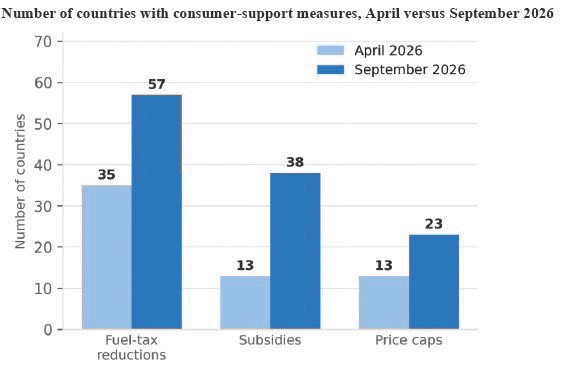
The findings are contained in a report titled ‘No time to recover: Compounding crises, depleted fiscal buffers and what it means for developing economies’, released ahead of the World Bank Group and International Monetary Fund (IMF) Annual meetings taking place in Bangkok, Thailand this week.
Minister of Finance, Economic Planning and Decentralisation Joseph Mwanamvekha and Reserve Bank of Malawi Governor George Partridge and other fiscal and monetary authorities are attending the meeting.
The report warns that many developing countries have exhausted fiscal buffers built up before recent global crises, leaving them with limited capacity to respond to new economic shocks while maintaining spending on critical services and development programmes.
Reads the publication in part: “First, price cushioning is weakening. Second, the stakes of weakening containment are large. Third, UNDP country offices report the same picture from the ground.
“All 26 offices surveyed in September judge that the worst is yet to come, 25 expect the crisis to remain or become a higher priority over the next six months, half of countries are managing it on top of pre-existing economic or fiscal stress and 10 are already preparing for the coming El Niño.”
UNDP estimates that about 130 million more people will fall below the $6.85 (about K12 000) a day poverty line this year, 121 million more below $3.65 (about K6 400) a day poverty line and 66 million more below the extreme poverty line of $2.15 (about K3 700) a day in almost all in developing countries.
In an interview on Monday, Scotland-based Malawian economist Velli Nyirongo said that given Malawi’s current economic structure and challenges, it will be difficult for the country to fully bridge the financing gap through domestic means alone.
“A multi-faceted approach combining domestic resource mobilisation, improved tax administration, foreign aid, concessional loans and private sector engagement is necessary to address the financing needs effectively,” he said.
UNDP administrator Alexander De Croo is quoted as having said that countries are pivoting their policy and letting the price hikes flow through because they have no choice due to lack of their fiscal space.
He said UNDP does not oppose efforts to secure debt relief for some of the hardest-hit countries, but argued that it would take many months to negotiate and instead called for more urgent action.
“We urge the international community, multilateral lenders, donors and partners to step up access to affordable finance so that countries can sustain support for their most vulnerable households,” said De Croo..
The development comes at a time development financing continues to face significant pressure due to worsening macroeconomic and debt sustainability conditions, which led to the country’s African Development Fund (ADF)-16 Performance Based Allocation being reduced, limiting the scope of project implementation.
Already, Malawi’s access to development financing is tightening, forcing the country to rely solely on grants amid deteriorating macroeconomic conditions and rising debt distress, according to African Development Fund (AfDB).
An assessment by the IMF showed that Malawi is in debt distress, reflecting persistent fiscal and external imbalances, significant currency depreciation and unsustainable levels of public debt.
The challenges have impacted Malawi’s country policy and institutional assessment and debt sustainability assessment ratings, key criteria used to determine ADF allocations and eligibility for concessional lending, according to AfDB.
Treasury data show that the current public debt stock levels stand at K23.9 trillion as of December 2025, which is 90.9 percent of gross domestic product.
Of this amount, 65 percent is domestic debt, translating to K16 trillion.